Visualizzazione post con etichetta 19th Century Art. Mostra tutti i post
Textual description of firstImageUrl

Gustave Caillebotte | Linge séchant, Petit Gennevilliers, 1888


Looking at "Linge séchant, Petit Gennevilliers" one almost feels the fresh breeze causing the white shirts on the clothesline to billow, flap and flutter like loose sails.
This airy picture is one of five works Caillebotte devoted to the motif of laundry drying on the line between 1888-892, while residing at his retreat in Petit Gennevilliers, a bucolic hamlet, half an hour by train away from central Paris.
Caillebotte and his brother Martial had purchased the property in 1881, after selling the family estate in Yerres, which had inspired many of Caillebottes’ earlier works.

Textual description of firstImageUrl

J. F. Willumsen | Pittore Simbolista / Espressionista


Jens Ferdinand Willumsen (71863-1958) è stato un pittore ed un poliedrico artista Danese, che operò in tutti i campi dell'arte visiva: scultura, ceramica, fotografia. Fu anche un apprezzato architetto.
Nonostante si sia cimentato in tutti i campi dell'arte visiva la pittura resta il suo ambito preferito.
Willumsen dipinse per tutta la vita ed i suoi quadri rappresentano la maggior parte della sua produzione artistica.
I temi analizzati e le tecniche espressive utilizzate nei vari periodi della sua vita riflettono l'interesse verso tematiche sempre differenti.

Textual description of firstImageUrl

Ernest Higgins Rigg | The potato pickers

Ernest Higgins Rigg | The Potato Pickers | Bradford Museums and Galleries

Ernest Higgins Rigg (1868-1947) was a British painter of rural genre, landscapes and portraits.
Rigg was born in Bradford and studied at the School of Art there and then at the Academie Julian in Paris.
He first visited Staithes in 1896 and lodged in Hinderwell at Quaker Garth and later stayed at the village’s Commercial Hotel.

Textual description of firstImageUrl

John Singer Sargent: "Fai uno schizzo su qualsiasi cosa e mantieni attiva la curiosità!"


"You can't do sketches enough. Sketch everything and keep your curiosity fresh".
"Non si fanno mai abbastanza schizzi. Fai uno schizzo su qualsiasi cosa e mantieni attiva la tua curiosità".

"Every time I paint a portrait I lose a friend".
"Ogni volta che dipingo un ritratto perdo un amico".

Textual description of firstImageUrl

Cesar Pattein | Wheat / Il grano, 1891

Son of a farmer, César Pattein (1850-1931) painted scenes of rustic life focusing on the happy times of the day with children laughing, playing and forgetting the toils of the hard day’s work.
Born in Steenvoorde, in northern France, César Pattein was raised among farmers and maintained a close connection to the rural region throughout his life.
He seldom traveled much further than Lille, with the occasional journey to Paris when exhibiting at the Salon.


Textual description of firstImageUrl

Erté's Futuristic Visions: A journey through Art Déco dreams

Erté was born Romain de Tirtoff in St. Petersburg, Russia on November 23, 1892.
He was the only son of an admiral in the Imperial Fleet and was raised amidst Russia’s social elite.
As a young boy, Romain worshipped his mother and was educated at home until the age of twelve, spending much of the time in the company of elegant women.
At the age of five, he conceptualized an evening gown for his mother and managed to persuade her to have it crafted. She was astounded by the results.


Textual description of firstImageUrl

Emily Dickinson | The wind / Il vento, 1862

Di tutti i Suoni sparsi nell'aria,
Nessuno mi Prende
Come quell'antico brano fra i Rami -
Quella Melodia senza fraseggio -
Che il Vento crea - lavorando come una Mano,
Le cui dita Pettinano il Cielo -
Poi scendono vibrando - con fiocchi d'Armonia -
Permessi agli Dei, e a me -

Jimmy Lawlor | Entertaining a Notion

Textual description of firstImageUrl

N. C. Wyeth, the Romantic Narrator

Newell Convers Wyeth (1882-1945) was an American Golden Age Illustrator artist.
He was a student of Howard Pyle and became one of America's most well-known illustrators.
Wyeth created more than 3,000 paintings and illustrated 112 books - 25 of them for Scribner's, the Scribner Classics, which is the body of work for which he is best known.


Textual description of firstImageUrl

Vincent van Gogh | I Girasoli, 1888-1889

I Girasoli sono una serie di dipinti ad olio su tela realizzati tra il 1888-1889 dal pittore Vincent van Gogh.
Tra i soggetti preferiti dal pittore, sono oggi tra le sue opere più riconoscibili e note presso il grande pubblico.

Storia

Già a Parigi, nella tarda estate del 1887, l'artista dipinse alcuni girasoli recisi, facenti parte di una serie oggi divisa tra il Metropolitan Museum di New York, il Kröller-Müller Museum di Otterlo, il Museo Van Gogh di Amsterdam e il Kunstmuseum di Berna.


Textual description of firstImageUrl

Robert Antoine Pinchon | Pittore post-impressionista

Claude Monet affermava che Pinchon era dotato di "Un tocco sorprendente al servizio di un occhio sorprendente".


Robert Antoine Pinchon (1886-1943), appartenente alla Scuola di Rouen (École de Rouen), fu un maestro del Post-impressionismo.
Per tutta la sua carriera fu costante nella dedizione alla pittura di paesaggi En plein air.

Textual description of firstImageUrl

Arthur Elsley | I'se biggest! 1892

The "I'se Biggest!", which was exhibited at the Royal Academy in 1892, won Arthur John Elsley’s considerable public acclaim, a small girl standing on tip-toe atop a thick book, comparing her height with that of a large St. Bernard Dog.
Later the painting had to be re-engraved to satisfy public demand.
Elsley continued to paint these good-natured dogs throughout his career, they appear in more than thirty of his paintings.


Textual description of firstImageUrl

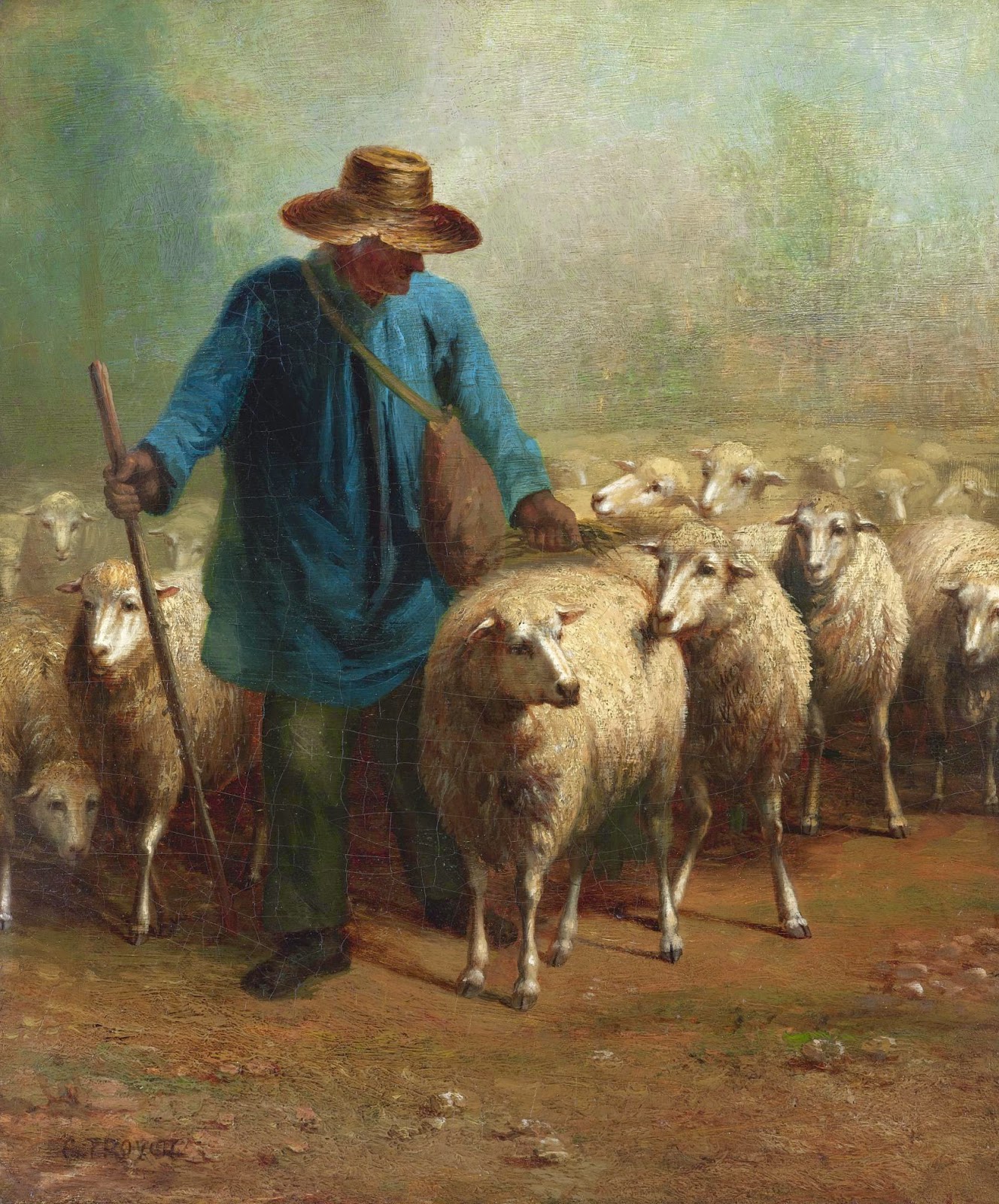
Constant Troyon | Pittore della scuola di Barbizon

TROYON, Constant - Pittore, nato a Sèvres il 28 agosto 1810, morto a Parigi il 20 marzo 1865.
Figlio di un decoratore della manifattura di Sèvres, e desiderando entrarvi anch'egli come pittore di fiori, cominciò a dipingere bozzetti dal vero, prendendo gusto al paesaggio.
Nel 1833 espose opere ispirate ai sobborghi in cui viveva: La Fête de Sèvres; Un coin du Parc de St.-Cloud, rivelandosi ancora legato alla maniera classica, pesante nelle ombre ed analitico.
I consigli di C. Roqueplan gli schiusero orizzonti più vasti; il Limousin e la Creuse l'ispirarono.


Ne riportò diverse vedute, tra cui: Vues prises aux environs d'Argenton (1836) e Foire champêtre dans le Limousin, 1838.
Nel 1841 si recava in Bretagna, dove si fece sempre più libero ed eseguì Tobie avec l'Ange.
Ma la sua evoluzione fu definitiva quando, conosciuti Th. Rousseau e J. Dupré, entrò nella pleiade dei paesisti romantici, detta "scuola del 1830", e frequentò la foresta di Fontainebleau, culla del paesaggio francese moderno, nel quale aleggiava lo spirito del grande iniziatore Constable.


L'opera sua si trasfigura, come attestano i quadri del 1844: Paysage dans la forêt; Dessous de forêt; Vue prise à Fontainebleau, 1845.

Finalmente un viaggio nel Belgio e nell'Olanda completa la sua vocazione. Vi conosce gli animalisti, vi ammira A. Cuyp e Pol Potter, ma sopra tutti Rembrandt.
Imparò allora a rappresentare natura e animali in intimo accordo.


Nel 1849 espose il celebre Moulin, palesandovi l'influenza di Rembrandt.
Col 1850 si dedicò alla rappresentazione di greggi ed armenti nei campi.
Non ebbe come i pittori dei Paesi Bassi il senso dell'atmosfera, ma assai vivo in lui fu l'affetto per gli animali che aiutano l'uomo nel suo lavoro.


Ricordiamo: Boeufs se rendant au labour; Effet du matin, 1855; Le retour à la ferme; Le retour du marché; La vache Rousse, tutti al Louvre.
L'esposizione Universale del 1855 consacrò la sua fama.
Fu nominato Cavaliere della Legion d'Onore dopo il Salon del 1849.
Le opere del Troyon sono nei musei del Louvre, di Lilla, di Amiens, di Montpellier e di Bordeaux. | di Andrée R. Schneider, © Treccani, Enciclopedia Italiana


Textual description of firstImageUrl

William Holman Hunt | The Awakening Conscience, 1853


The Awakening Conscience was conceived as the material counterpart to Hunt's The Light of the World (1851-3, Warden and Fellows of Keble College, Oxford).
Its inspiration was a verse from Proverbs:
'As he that taketh away a garment in cold weather, so is he that singeth songs to an heavy heart'.
With his typical thoroughness, Hunt hired a room at Woodbine Villa, 7 Alpha Place, St John's Wood, a 'maison de convenance', to use as the setting.

Textual description of firstImageUrl

Gaetano Bellei (1857-1922)

Dopo la formazione artistica all'Accademia delle Belle Arti di Modena, sotto la guida di Adeodato Malatesta, Il maestro Accademico Italiano Gaetano Bellei si trasferisce a Roma, dove frequenta l'accademia di San Luca, successivamente quella di Francia ed in contemporanea, quella spagnola.
Nel 1883 frequenta Firenze per un anno, dove porta a fine il proprio pensionato artistico.
Nella città toscana entra in contatto, per il suo eclettismo, con collezionisti, mercanti e mecenati di origine inglese per lo più, che gli commissionano varie tipologie di opere.


Textual description of firstImageUrl

Sir Lawrence Alma-Tadema | Stile artistico

Considerato uno dei pittori Vittoriani più influenti, Sir Lawrence Alma-Tadema (1836-1912) costituisce una presenza molto particolare nel panorama artistico del XIX secolo; lo stile ed i contenuti delle sue opere manifestano allo stesso tempo elementi antichi e moderni, visitati in chiave personale, tanto che l'Art Journal del 1870 scrisse su di lui: «Alma-Tadema è difficile da classificare: non appartiene a nessuna scuola, o per meglio dire, è lui stesso una scuola».


Textual description of firstImageUrl

Odilon Redon | Still Life

Odilon Redon's still life paintings are known for their vibrant colors, dreamlike atmosphere, and Symbolist style.
Unlike traditional still lifes that seek realism, Redon's works are visual meditations that place the visible in the service of the invisible, evoking emotion and imagination.


Textual description of firstImageUrl

Pablo Picasso | Sleeping peasants, 1919

Sleeping peasants, is the most potent of the small erotic paintings that is brilliantly coloured.
The restless, irregular rhythms mapped out by the contours of the tumescene limbs and ruckled drapery amount to a graph of love-making which has just occured, while the woman's thrown-back head and uncovered breast confirm her maenadic ancestry.
The ripe bodies nestled in the ripe crops implying some archaic fertility rite.

At-The-Museum-of-Modern-Art-MoMA

Textual description of firstImageUrl

Vincent van Gogh | Roses and Sunflowers, 1886

Van Gogh painted this still life during one of his crucial transitional phases.
Between 1886 and 1888 he spent two decisive years in Paris, which initiated a change in his working method, especially his understanding of color effect.
Schooled in the work of the French Romantic Eugène Delacroix, his colors lighten during this period and he begins to experiment with extreme contrasts.
In "Roses and Sunflowers", one of more than 30 still lifes he produced in Paris, this complementary contrast is created using red and green.

Vincent van Gogh | Roses and Sunflowers, 1886 |Kunsthalle Mannheim, Germany

Textual description of firstImageUrl

Léon-Jean-Basile Perrault | Pittore accademico di genere

Léon-Jean-Basile Perrault (1832-1908) è stato un pittore Francese.
Nacque da una famiglia modesta: il padre, Henri, era sarto.
Entrò a 10 anni nella scuola di disegno di Poitiers, allora diretta dai fratelli Hivonnait, dove rimase fino a 14 anni quando, dovendo contribuire al mantenimento della famiglia, trovò un lavoro presso un decoratore, con il quale collaborò ai restauri degli affreschi della locale chiesa di Sainte Radegonde.


Textual description of firstImageUrl

Francesco Hayez | Pittore romantico

Francesco Hayez (1791-1882) nacque in una famiglia di condizioni modeste.
Il padre Giovanni era di origini francesi; la madre, Chiara Torcella, veniva da Murano.
Il piccolo Francesco, ultimo di cinque figli, venne affidato ad una sorella della madre che aveva sposato Giovanni Binasco, armatore e mercante d'arte proprietario di una discreta collezione di dipinti.
Già da piccolo mostrò una predisposizione per il disegno e lo zio lo affidò ad un restauratore affinché ne imparasse il mestiere.